
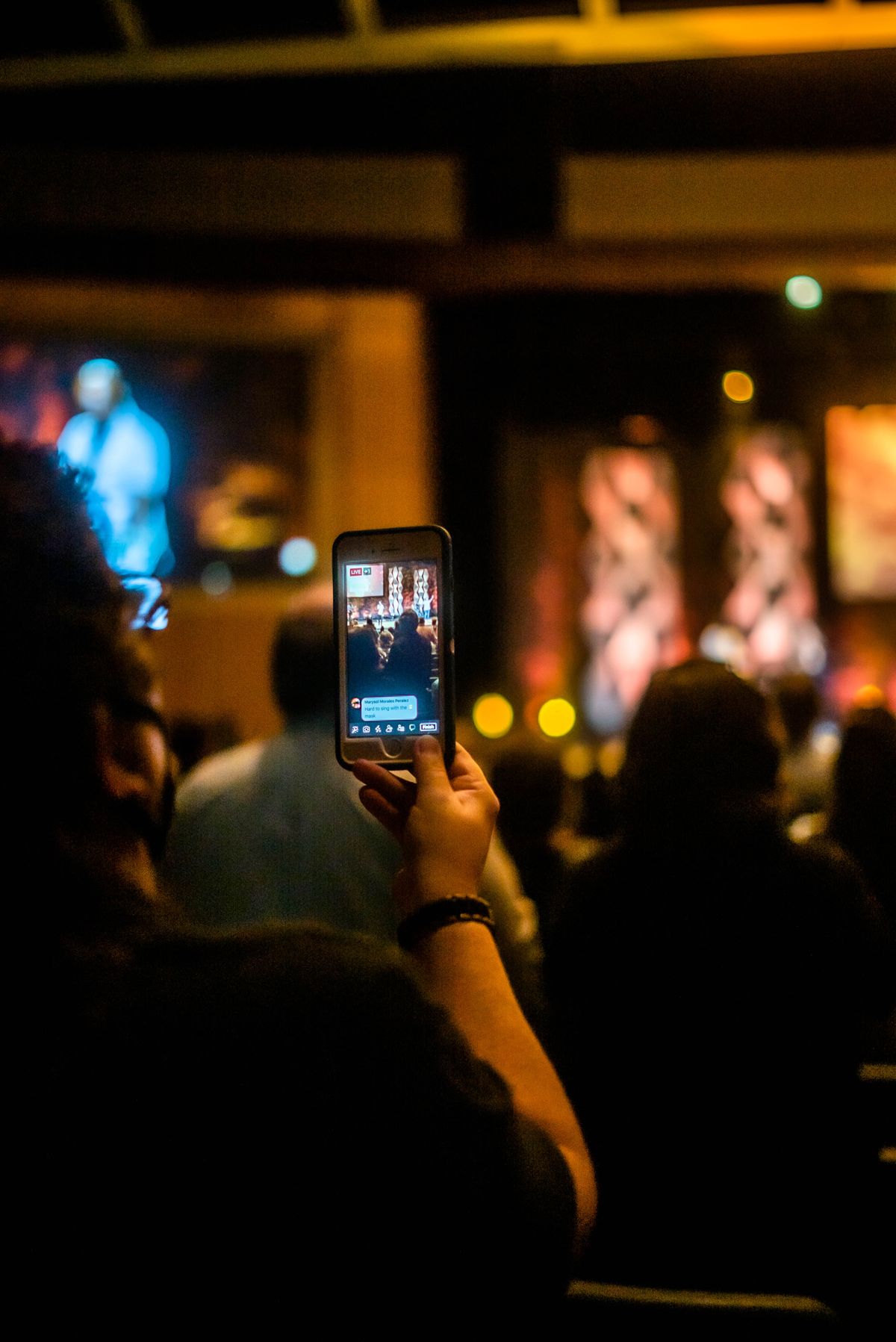
Four viewers
You set it up, you run it every week, and the number says four.
It is deflating in a specific way, because the work is real. An hour of setup, an hour of operating, the mental load of being responsible. For four people.
Before you stop, some things worth knowing about that number... because it is the least informative statistic available to you.
What the live count leaves out
It excludes everyone who watches later, which is usually most of your audience. Watching live requires being free at a specific hour. Watching later requires only interest. For most venues the recorded audience is several times the live one, and it keeps accumulating for weeks.
It counts connections, not people. Four viewers might be four households... perhaps eight or ten people watching together on a television.
It does not tell you who. Four people who are housebound, unwell, or overseas is a completely different result from four people who could easily have attended. The count treats them identically; you should not.
It is measured at a moment. People join and leave. A stream showing four at any instant might have had twenty distinct viewers across an hour.
Live viewer count is the number most visible and least meaningful. It is worth actively resisting how much it affects your morale.
What to measure instead
Total views over the following week. Check seven days after, not on the day. This is your actual reach and it is usually a much better number.
How far people watch. Ten people who watch forty minutes is a far better outcome than a hundred who watch thirty seconds. If most viewers leave in the first minute, that is a real signal... usually about audio, or about the first thing they see.
Whether the specific people you meant to reach are reached. If you started this for a handful of members who cannot attend, then those people watching is success. Comparing yourself to a venue with a thousand viewers is comparing against a different goal.
Whether anyone mentions it. Someone saying "I watched last week" is worth more than a number, because it tells you the stream is part of how people relate to your community.
Making it more likely people watch
Most low viewership is not about quality. It is about nobody knowing.
Post the link when it starts. The single most effective change. A link shared three days earlier is buried by the time the event begins. Something posted at the moment it goes live reaches people while the decision is available to them.
Say it exists, repeatedly. People forget. A regular mention that services are streamed and where to find them does more than any production improvement.
Make it easy to find. If someone has to search, they will not. One obvious place, always the same.
Tell people afterwards too. "Last week's service is up" reaches everyone who could not watch live, which is most people.
Ask the people you built it for. If you started this for particular members, ask whether they are watching and whether it works for them. Sometimes the answer reveals a fixable problem... the link is hard to use, the sound is poor on their device, they did not know it existed.
When it is genuinely not worth it
Worth being honest, because the answer is not always "keep going."
If nobody watches, live or recorded, for months, and you have made it findable and told people, then perhaps your community does not need this, and the effort belongs somewhere else. That is a legitimate conclusion and not a failure.
If it is burning out the person running it for a handful of viewers who could attend in person, that trade may not be worth it. The volunteer is a real cost.
If it is degrading the room. If streaming has made the in-person experience worse (equipment in sightlines, attention diverted, the event shaped around the camera) the priority is wrong. The people present come first.
The case for continuing anyway
The audience is often invisible. People watch and never say anything. Absence of feedback is not absence of viewers.
It grows slowly. Streams that reach a lot of people rarely started that way. They accumulated an audience over a long time, mostly through people mentioning them to each other.
The recording is the real asset. Even if nobody watches live, you are building an archive. People come back to it for specific reasons (a memorial, a milestone, something someone said) and the value of having it appears years later.
The few might be the point. If one person who cannot leave their house watches every week, that is a whole person, fully. Whether that justifies the effort is a judgment about what your community is for, not a metric.
The reframe
Streaming to a small number is not a failed broadcast. It is a small number of people being reached, which was always what it was.
The question is not "why are there so few," but "are these the people we meant to reach, and is the effort proportionate?"
If yes, four is fine. If no, the fix is usually telling people rather than improving the production.
And check the seven-day number before you decide anything. It is almost always better than the one that made you feel bad on the day.